Introduction
At Mavtrek, we believe in a grassroots approach that puts front-line workers first. Our easy-to-use mobile interface captures information in real time, right at the point of work. This creates a constant, accurate flow of data throughout your organization, enabling quick, informed decisions for leadership. In contrast, top-down platforms often miss the mark. Their complex, authoritative processes can overlook the day-to-day realities of front-line workers, leading to delays, miscommunications, and inefficiencies.
Our grassroots strategy empowers your workforce to operate efficiently and communicate seamlessly. With real-time field data, Mavtrek ensures everyone, from front-line workers to executives, stays on the same page, driving better outcomes for the whole organization. And isn’t that the point of work?
In this case study, we show how Greenville, NC’s Public Works Department uses Mavtrek’s Point of Work platform to meet the needs of a fast-growing community while doing more with less.
The challenge
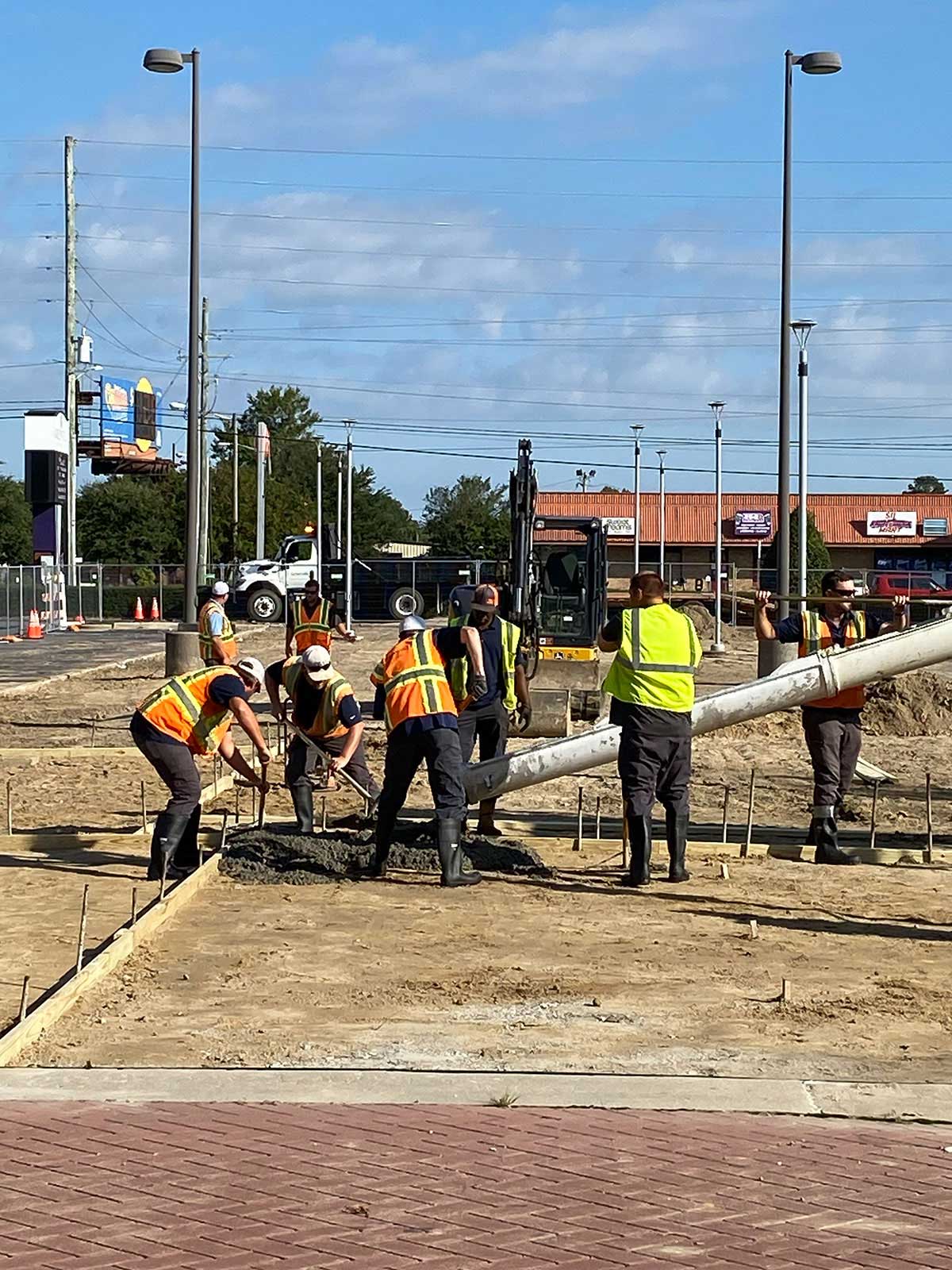
The City of Greenville Public Works Department (GPW) serves one of the fastest growing cities in North Carolina. Managing street and stormwater maintenance, public transit, sanitation service, the city’s fleet, and building and grounds maintenance is a daunting task in such a large, booming city for GPW’s administration.
Aging infrastructure has only added to the stressors placed on the department to keep up with the demands of the 12th largest municipal community in North Carolina. As the workload has grown exponentially for GPW so has the need for more human resources and equipment. However, getting those resources isn’t an easy task when most of your budget dollars come from taxes, fees, and grants.
“You can’t go to the city council and just say, ‘we’re filling a lot of potholes, constantly cleaning streets, and working on a lot of projects, please give us more resources,’” said Public Works Director Kevin Mulligan. “Using only words doesn’t resonate. You have to paint a picture with hard data and solid numbers so all of us – workers, policy makers, and citizens – can truly understand what we’re dealing with.”
Data wasn’t only needed to secure increased funding and gain a better understanding of their work system. Mulligan and his team also sought to improve internal operations and decision-making processes. They recognized that having accurate, reliable data would allow them to identify trends, optimize resource allocation, and streamline their workflow to better meet the growing demands of the community.
Additionally, with more transparent data, GPW could enhance communication with both city leaders and residents, providing evidence of the department’s work and highlighting the challenges they face.
“We wanted to be able to capture data we can trust so we can demonstrate the scope and scale of what we’re accomplishing every day,” said Mulligan. “The goal was to use that data to paint a clear picture—not only to justify our resource needs but also to ensure we’re operating at maximum efficiency and continuously improving our services.”
GPW’s roadblock to getting that data was a tracking system of paper spreadsheets, Word docs, and handwritten phone call logs and notes. “It’s hard to quantify how much to ask for when what you’re doing is buried in a pile of paper,” said Mulligan. “We needed to be able to accurately create metrics for our demand, work, assets, and supply.”
GPW needed a solution quickly but with an already strained budget, an enterprise-sized software system was out of the question both financially and due to the amount of time it takes to deploy such a system. Further, GPW knew of other municipalities that went down that path and failed after putting in a lot of hard work and time, ultimately abandoning those systems altogether due to the many obstacles they present, like low adoption rates.
All these factors pointed to GPW’s need for a solution that could accommodate a phased-in implementation that would accommodate existing budgets, work securely with their existing systems, and be easy to use for quick adoption by staff. Having heard about the successes the cities of Concord and Monroe, NC were having using Mavtrek’s 811 software, Greenville Public Works chose Point of Work for a pilot program for its Street & Stormwater division.
Our research showed many top-down system implementations fail at such a high rate, this was a concern for us. However, we found two municipalities that were using Mavtrek’s Point of Work platform in North Carolina, Concord and Monroe, and they were experiencing tremendous success. It reassured us that Mavtrek could be the right fit for us—and they were. They came in and got us up and running quickly, without the need to contract with a third-party as is often needed with large platforms.
 Kevin Heifferon
Assistant Director of Greenville Public Works
The solution
Leading efforts to ensure system synchronization between Mavtrek and the City of Greenville (COG) was Assistant Director of Public Works Kevin Heifferon.
“Mavtrek immediately began to tie together all our systems and those like 311, 811, ESRI, GIS, and Munis Financials to Point of Work’s cloud-based services,” said Heifferon. “Together, we then connected all the data needed to build a technology solution that best fit the way we work. Mavtrek’s value was also multiplied by allowing us to better leverage our existing technology investments.”
Mavtrek Point of Work seamlessly connected with City of Greenville systems, as well as all other essential systems. “It’s now our operations Mothership,” said Heifferon. “Finally, our all-over-the-place system was in one place and manageable thanks to Point of Work.”
A meeting was scheduled with GPW stakeholders and Point of Work was deployed that same day. Street Superintendent Gentry Coward was the liaison between Mavtrek and GPW crews. “I was excited to deploy Point of Work to my crews. Previously, we had dabbled a bit using Munis, but it was too difficult for us to adopt,” said Coward. “Completed work continued to be tracked on paper that might sit in a truck for a month before being captured. We really needed something that would be easy to use.”
In the first deployment session, Mavtrek configured the system to meet the exact needs of field crews by reducing features and options to only what was needed and allowing crews to truly do what they do best, more efficiently. After a brief training session, crews fully adopted Point of Work, even training other crews on how to use it. GPW crews experienced the power and ease of Point of Work’s interface, and they were off and running.
“With the mobile environment, everything is right at your fingertips,” Coward said. “It’s easy, crews have really taken to it, and they use it. As soon as they complete something, they mark it as complete, and it’s done.”
For a couple of decades, I’ve observed the failures of top-down systems largely due to their mindset of making decisions without involving those actually doing the work. This way of thinking introduces unnecessary complexity. Users are overwhelmed by the full scope of an enterprise system and then blamed for ‘resisting change’ when implementations don’t go well or fail.
We know user workflows require only a fraction of the total system, and that’s one of the major benefits Mavtrek delivers. We build a robust system needed for the entire organization, but then expose users to only the data and functionality they need to complete their jobs based on their roles and requirements.
 John Little
Mavtrek Founder and CEO
Public Works Coordinator Jennifer Mills headed up efforts to use Point of Work to improve communications for all involved. Her staff were often forced to communicate with lagging or even missing information, creating frustration for residents, crews, and especially the staff specialists caught in the middle. With past failed attempts with other platforms on her mind, Mills knew that crew adoption to use Point of Work was paramount to success.
“The crews are really using it and that helps my staff tremendously,” said Mills. “It’s reduced our backlog tremendously. Now the paperwork is gone. My staff gets a request, Gentry gets it, the crews get it. It’s an easy step for us to do and we’re all on the same page with up-to-date information. Now, we can confidently communicate back to residents.”
The swift, full adoption by crews, staff specialists, and supervisors, not only improved communications, but started a flow of data into the Point of Work dashboard.
The Point of Work Platform: Gain Control and Create Balance
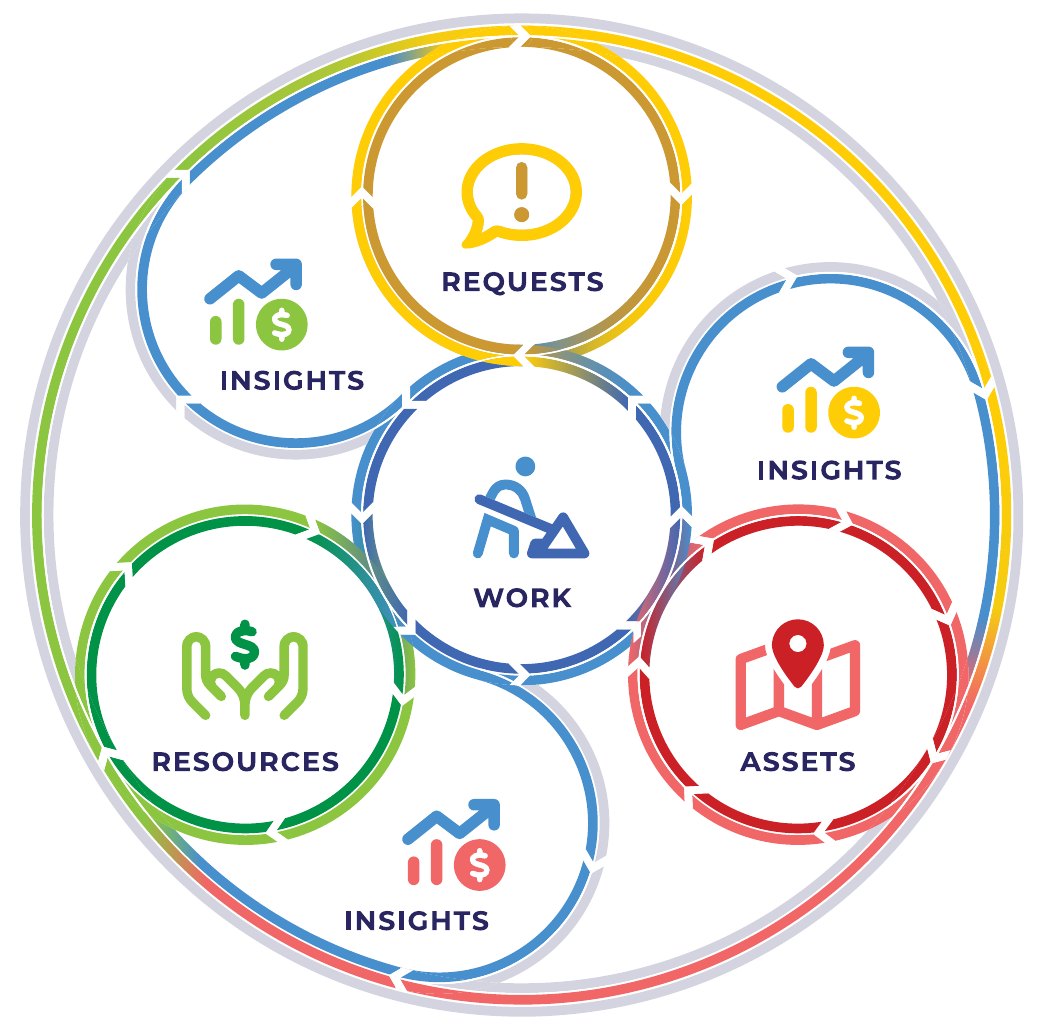
We approach every business as a unique, living organization made of people who want to make their environment the best it can be. Doing so is the Point of Work.
Every organization works within a system of requests, work, assets, and resources. How your organization responds to that system is where the artistry of what you do comes to bear. It’s you and the people you work side-by-side with who breathe life into your system. You give it meaning—and it’s made of people, family, friends and neighbors. To ensure the best quality of life your community deserves, your ability to manage the unique needs of the system is something that was built over time, often generations.
In this way, we understand your organization is unique. Our Point of Work software was created with your way of life in mind, not a system. It allows you to continue to work in the ways you always have so you can continue to do the things you do best, all while Point of Work continuously generates the data you need to better understand and improve the ways you care for your community.
The outcome
“Everything is easy to access. In those first weeks of entering data we immediately found insights,” said Mulligan. “Into how we’re doing, the challenges we face daily, ways we can improve, but also the hard evidence we need to justify asking for more resources.”
Greenville GPW was able to secure funding from the city council to address their needs with approval for additional resources in Fiscal Year 2024-25. “Showing council thousands of locations on a map that represented demand, work, and progress done over a four-month period was eye opening to them,” said Mulligan. “Point of Work gave us the ability to paint an accurate, compelling picture of the services we provide, the earnest, hard work we do to complete it, and the resources needed to meet growing demands.”
Not only did GPW find the solutions to the problems they were facing, but they also reaped some added benefits they didn’t anticipate. “Point of Work isn’t a silo system. It leverages data from our existing investments like ESRI, 311, 811, Munis, and others,” said Mulligan. “It has brought them all together and we’ve seen more ROI from those investments.”
Also, Greenville Public Works can now compare their metrics to the UNC School of Government’s Municipal Benchmarking Project and start to measure themselves against departments in other communities to gain and share even more insights into the never-ending task of delivering exceptional service.
Capturing the metrics and gaining insights is giving Greenville Public Works the confidence to share more data, more frequently with the public because they can now see what they’ve always known—GPW does everything in its power to meet the needs of a thriving and growing community, often doing more with less.
“If our residents don’t know what we’re doing, then we’re not doing anything, right?” asked Mulligan. “With Point of Work, we can now tell our full story of hard work and our relentless pursuit to make Greenville the great city it is.”
Next steps for Greenville Public Works
The pilot project has been an extremely successful first step. They have proven to us that their grassroots, user-first approach works and have tailored it to work specifically for Greenville Public Works. Now we’re excited to expand the pilot into GPW’s other divisions and move into implementing Mavtrek’s asset and resource management which will deliver real insights to us and free us up further to provide the best care and service to our citizens.
Public Works Director
Mavtrek experts
John Little | Founder & CEO
With over two decades of experience as an IT consultant, John Little is recognized in the industry for his thought leadership and strategic insights in the development of operational management software systems.

Chris Brockway | COO
With over three decades in the private sector revitalizing struggling businesses to profitability, Chris Brockway is recognized for his dedication to lean principles and enhancing customer and employee experiences with his innovative software solutions.
Mavtrek in the original 2024 publication
Mavtrek provides comprehensive cloud-based tools for planning, assigning, and monitoring fieldwork, collecting field data, and ensuring regulatory compliance. Designed for governments, utilities, and businesses of any size, the platform enhances maintenance operations, asset lifecycle management, and supply chain performance, offering flexible pricing and seamless integration with other enterprise systems through an open API.
For more information, visit Mavtrek.com. For current product capabilities, explore Features.